Thursday, February 24, 2011

'One has to wonder...doesn't one?' The Sequel

(This is a followup post to this one from last year.)


As I'm a little out of the loop these days, I've only just discovered that the Bustamante vs Pearson suit was 'dismissed' last week. 


So I'm kinda wondering why Cal DiFalco over at The Hamiltonian, so full of piss-and-vinegar with his coverage of 'Bustamante's Boondoggle' last summer/autumn, seemingly decided not to cover the end result.


At all. 


Hmm...maybe...'damage control'?

Tuesday, February 15, 2011

Civic Engagement: What Can Residents Do? Addendum Two

As stated previously, I believe that the only authentic way to improve local governance on a long-term basis is to 'increase the relationship of engagement between the residents and their Councillors'.

The direction of the engagement is paramount. It has to come from the citizenry to be authentic and longstanding. The primary impetus has to come from us.


'One thing leads to another.'

Not just the lyric to a great song by The Fixx. Especially where The WWW is concerned. You do a search for one thing, something unexpected pops up along the way...and before you know it, you're the beneficiary of a gem. 

'Conversation Cafés'

Here's a quick description: 

"Conversation Cafe is an informal dialogue method which invites people to take part in hosted discussions about topical issues in  cafes, bookshops and other public places."

And here are some sites where you can find more information about the notion's background, as well as tips and suggestions as to how to use such get-togethers effectively:

Conversation Café is probably the best online resource. (It's pretty cool to see there are already Canadian locations listed.) Here's what its founder has to say about the site's history:

"In the summer of 2001, three Seattle friends, Susan Partnow, Habib Rose and Vicki Robin, ran an experiment. They believed that more spontaneous and drop-in public dialogue would serve democracy, critical thinking and neighborliness. So each sat in a different café once a week and invited whoever was there, plus friends, to dialogue about things that really mattered. Thus the Conversation Café Method was born. At the end of the summer they met to plan an outreach method so that in-depth conversations would take place more often in Seattle. That was September 10, 2001. The next day made it clear that Conversation Cafes could help diverse people process 9/11."

Here's their Facebook page

People and Participation reference the above, but they're such a good starting point for all manner of civic engagement that I'm including them. 

Finally, here's a Louisville site dealing with conversation cafés and community dialogue in general. 

Sunday, February 13, 2011

Yup. That's what I like to see.


This ad crossed my desk this week. (Thanks go out to Diana for bringing it to my attention.)

Friday, February 11, 2011

"I think we need to talk..." Part Three

'Preventing mysteries, controversies and scandals.'

Hmm... Well, I can't say that I believe that the potential success rates with all three of these elected officials 'problems' would be identical, assuming we had a better level of engagement in local governance. 

Mostly because I don't think there's any sure-fire way to predict who's most likely to do something that's scandalous. Even with the best candidate vetting system imaginable. People are- Well, they're people, and therefore they're flawed, they're subject to the most ridiculous whims, prone to base indulgences, no matter what their apparent grounding. Yes, the more candidates are vetted, the more scrupulous the 'interviewing' is by the voters (ie, the 'employer'), then the better the chance is that those candidates who have peculiar tendencies will get weeded out. Still, there's no guarantee. But considering how little a role the average person currently plays in the process, don't you think there's massive room for improvement?

'Controversies'? Well, this is where I tend to think we can produce better local governance. Given how little communication, how little actual dialogue there currently is between the average resident and the average Councillor, if this were changed, if there was a hellova lot more contact, if there were regular town halls, if Councillors and citizens were online and genuine back-and-forth dialogues were taking place, I believe that a lot of the perceptions about say, the PanAm Games Stadium Site Selection Process would never have gotten traction. 

'Employees' need guidance. From their 'Employer'. And currently, I'm not convinced that there is. A vote every four years might be 'a message' to elected officials (but even this isn't reflective of much, not really...or is it...?), but it's not enough. I don't believe it's reasonable to simply hand over the keys and let your 'Employees' carry on without regular and protracted input. That may be 'the way we've done it', but objectively, from within any other arena in our world? Just plain silly.

As for 'mysteries'... This is where 'increasing the relationship of engagement between residents and their Councillors' would pay off the most. There should be no 'mysteries'. There may be disagreements, there may be instances where some of the residents disagree with the way their Councillor is proceeding with an issue, but there's absolutely no reason for 'mysteries'. Clarity should be the order of the day. 

Fifty years ago? Sure. With contact and back-and-forth limited to phone calls and mailed letters and knocking on the Councillor's City Hall door, I'm sure the opportunities for 'mysteries' were myriad. But in today's world? More importantly, in today's interconnected world with a potentially far more involved citizenry and Councillors who accept that using all that the Internet has to offer is part of their job, as is actually collaborating with their residents, their constituents, their 'Employers'? Nope. 

Nein. 

Nyet. 

Notonyourfarcquinglife.

By all rights, if we had the migration of paradigm I yammer-on about, if both partners in this dance performed as they should, given the possibilities of this new construct, 'mysteries' should become things of the past. 

To a great extent, ditto for 'controversies'. 

'Scandals'? Harrumph; as I've said, until we're electing robots, fuggettaboutit.

Thursday, February 10, 2011

'I think we need to talk..." Part Two


During the 2010 Hamilton election, I saw things that made me shake my head so much...I'm still needing chiropractic attention. 

I'll explain all that in a second, but first, a little primer as to how I see local governance. 

We, the people, are both 'Employer' and 'Customer' at the same time. 

Councillors and the Mayor are 'Employees' and 'Service Providers' at the same time. (Additionally, all City Council members both 'serve' and 'lead'.) 

The idea of an 'Employer' hiring a staff, giving them the keys to the facilities, providing them free-rein to all the resources at their disposal...and feeling they have a voice at the conclusion of a four-year contract is...preposterous. 

Moreover, the idea of an 'Employer' hiring their staff based primarily on 'name recognition' is insufferable. 

With so much at stake, don't you think that it behooves the 'Employer' to vet the candidates thoroughly? To effect as stringent a selection process as is possible, to corral as much information as is possible, to impose their not-inconsiderable abilities (they are the 'Employer', don't forget. The 'Owner' of it all...) on determining to whatever extent they are capable, which candidates bring to the positions the best array of skills, aptitude and, dare I suggest it, 'brilliance'?)

On the other side of the coin, don't you think that there should be some kind of air of propriety on the part of a candidate, one that doesn't have, shall we say, someone coming in off the street with little relevant within their skill-set for what the position requires, except an admirable enthusiasm...and a desire to 'do better than the bum wot was working there before me'? Ambition is one thing. Social-conscience-tinged arrogance is another. 


How many mayoral candidates did we have last October? Fifteen?

How many Ward 2 candidates were there last October? Nineteen?

Six in Ward 3, seven in Ward 6, five in Ward 13...

To properly get a handle on this many candidates...think about it: those in Ward 2 had thirty-four candidates to sort through, in toto...in order to do justice to the exercise-

Well, I don't believe the average person does justice to it, or even can do justice to it. This is, if we go back to my analogy, an 'interview process'. We're interviewing for the positions that in many ways, will determine our quality-of-Life more than any others. Even in an 'ideal' setup, one that's a manifestation of the notion of 'increasing the relationship of engagement between residents and their Councillors', it would be too much. Within our current construct, it's virtually impossible. 

So I'm here to talk about two issues. The first is the idea of people taking far more seriously the responsibilities of developing 'informed, qualified opinions' about those they're considering voting into office, as well as the same being true for those seeking election. And the second is the idea of having what would amount to a 'primary' setup, whereby fifteen candidates may start out on the election campaign path, but no more than a pre-determined number...I'm thinking five...would make it onto the final ballot. "To both weed out the 'questionable and time-consuming' candidates, and provide a more-focused field for voters to seriously consider." (Thanks, me.)


Civic engagement and 'responsible voting' are connected. It's unlikely you'd get authentic 'responsible voting' from an electorate who is detached from the process. One that isn't genuinely conversant with the issues facing the city (the equivalent is a sports fan who can wax dialectical about how their team's faring, individual stats, prospects), who hasn't been in dialogue with their Councillor, who hasn't either attended town hall meetings, candidate debates, or isn't a member of a neighbourhood or community association. So in order to have genuine 'responsible voting' across the board, it's the behaviour that leads up to voting day that matters most, to what extent the previous 1460 days of citizen activity could be seen as being reflective of credible 'civic engagement'. 

In order to have a great 'interview', both parties have to be prepared. The 'Employer' has to have done their homework, taken the time to examine the candidate's résumé, and most importantly, actually interview the person. Actively interview them.  I believe my stance on what's required of residents (the 'Employer') is clear, I don't need to belabour the point.

The same goes for the candidate. They need to have done their homework. They need to have developed an understanding of what the job requirements are, of the overall scope of the position. 

From where I was standing, I saw a distinct paucity of this in the last election. (I did, however, see some great candidates. My eyesight is not entirely jaundiced.)

I was appalled by how little was grasped by so many candidates about local governance. About the normal demands placed upon Councillors. About how little they actually comprehended about issues. 

After one debate in particular, I came away with this belief: a candidate has to be at least as cognizant of issues, of approaches, of options as the incumbent. (If they're running. Which by-and-large, they usually are.) 

And in today's world of blogging, with so many resources at our fingertips, there's no reason at all why someone sincerely interested in seeking office can't put themselves through an 'apprenticeship' of sorts, properly preparing themselves to engage in a full-on, in-depth, substantive election campaign...where debates are so God-damned disappointing, so utterly dispiriting. 


Primaries. Run-offs. Yes, I know it smacks of partisan politics. Party-based systems. But I cannot believe that anything good is being served when we have two-and-a-half dozen mayoral candidates in a race. 

Whose needs are actually being addressed here, under these circumstances? Is anyone's?!?

Frankly, candidates need to give a little more thought, some sincere, soul-searching thought to what they can contribute to an election. Especially if it means that the concerted focus that a mayoral campaign deserves, ends up being compromised to the equivalent of rough gauze. (I'd say that at least a giant's handful of those seeking the mayor's robes shouldn't have cluttered things up.) 

Short of this, I believe we need to consider a means to prevent this kind of 'occluded' result. We need some kind of 'play-off' system. 

Now, for those crying 'Foul!' at the inequities associated with this, let me remind you that as I'm constantly yammering-on about this new paradigm, where our citizenry is aware, involved and engaged, nothing would be lost in a 'primary' setup. Because if we had a discriminating group of voters, they'd get to the heart of the matter, separate the wheat from the chaff-

I have faith in people 'doing the right thing' under appropriately 'right' circumstances. 

No, I do not have a firm proposal to present to you. Not right now, not yet. But surely this is something to consider. 


Finally, how to reduce the number of 'mysteries', scandals and controversies.

"I think we need to talk..." Part One


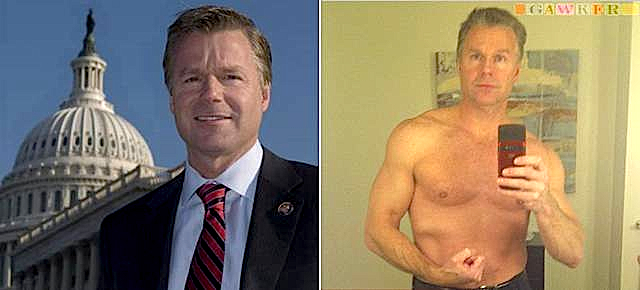
This week, upstate New York Congressman Christopher Lee resigned over a Craigslist scandal. 

I mention this not because it holds any relevance to this blog, but is tangentially connected to this post. 

During the last municipal election, we had a real confluence of the grumpy, the intolerant, the self-indulgent, the embarrassing...and the apathetic. 

Of late, a lot of these elements have come into play over the PanAm Games Stadium Site Selection Process coming to a head (that's a marvellous visual, isn't it?) as well as Mayor Bratina's attempted United Way donation.

Additionally, local blogger Rene Gauthier posted 'Transparency (Lesson 3)' as part of an exercise to take a look at 'What happened?!?' during our stadium selection débâcle.

Controversies. 

Scandals. 

Head-scratching mysteries. 

Politics on all levels tend to be rife with this stuff. It goes in cycles, yes, and certain eras have more of their shares than others. But until we start electing Artificial Intelligence units, we're kinda stuck with the imperfections almost guaranteed by the human condition. 

Except that, specifically in local governance, we actually have far greater 'power' over what kind of person gets into office, and more importantly, we have far greater input into how they perform. 

We just can't expect these truths to be in effect within the paradigm we've (mostly passively) given our approval to. This 'hands-off but for voting every four years' attitude, one where we don't demand to be part of the collaborative process, we don't demand to know (within reasonable limits) what's going on, we don't demand answers...


...so that there is no mystery surrounding issues such as the PanAm Games Stadium Site Selection Process. (Having the opposite doesn't guarantee that everyone gets what they want. Just that they are able to understand why things end up the way they do.)


Next up, vetting our candidates. 

Monday, February 7, 2011

Civic Engagement: Supplementary Reading, Part One

When I began considering 'increasing the relationship of engagement between residents and their Councillors in local governance', while I was powerfully drawn to the notion, I really didn't have a clue where my ponderings would take either me or it. What route would be taken. How the notion might grow, take shape, become an approach and not just remain some short-lived, yammered-on thought. 

It helped that we were in the middle of an election campaign. 

It helped that my primary Life Challenge at the time was 'engagement'.

It helped that I had 24-7 Internet access, it helped that I can be a little 'fixated' (thank you, Virgo-rising in me...), it helped that I'm passively politically aware...

And it helps that I have some indulgent friends and family. Who've allowed me to yammer-on while I played with this concept. (More like they didn't insist that I give my head a shake and suggest I get another hobby.)

Last month I finally put my money where my mouth was; I published two series on practical ways people can move towards developing the lifestyle change, the value system that has civic engagement as a default. The one for Councillors begins here, while the one for residents begins here. Hopefully, I'll be adding to these lists as inspiration hits.

Further to this, there is a wealth of reading materials for those who want to look at things a little deeper. Admittedly, these materials are not for everyone. Meaning that it may well be that for the overwhelming majority of those people who migrate to being an active player in their local governance, 'going academic' isn't their cup of tea. They prefer to just be doing things in their community, participating in neighbourhood-building, making a difference in practical, hands-on ways, being engaged with their Councillor. They'd prefer to leave the theories and the navel-gazing to others. 

For those who are intrigued by how residents in other cities are dealing with getting to the place I'm talking about getting to, for those curious about things from a contextual standpoint, and for those who are behaviour and process weenies, I'm going to be providing links to papers, to blogs, to sites that deal with all of this. Mostly because I'm a shadow-weenie myself. 

Here then, is the first one: 'Deliberative Dialogue To Expand Civic Engagement: What Kind of Dialogue Does Democracy Need?' by Martha L. McCoy and Patrick L. Scully. Here's the introduction:


"The need to expand and deepen civic engagement is a central theme of a loosely defined and growing civic movement. A strong civic life and a flourishing democracy presume the active involvement of many people across society. Civic engagement is thus both a barometer of our public life and a focal point for action when we want to improve it. While regular citizen-to-citizen communication has always been a central part of democracy, public deliberation is just starting to be defined as a field of thought and practice. In this article we focus on face-to-face democratic deliberation as a means of enhancing civic engagement."


Let the dialogue begin.